
Employee consulting is a strategic tool for enhancing human resource management efficiency and balancing legal requirements with organizational operational objectives. By developing work policies that comply with modern legislation, improving the work environment, and supporting talent management, companies can boost productivity, reduce risks, and build a sustainable corporate culture based on transparency, innovation, and trust.
In light of global developments and current economic challenges, employee consulting is considered a vital pillar for organizational success and achieving financial and organizational sustainability. This approach is based on the belief that human capital is the primary driver of competitive advantage in the market. Therefore, employee consulting has become a strategic tool needed by organizations, whether large or emerging, to develop flexible work environments that meet the requirements of modern labor and human resources laws.
Employee consulting provides a comprehensive platform that supports the adoption of sound work policies and procedures, ensuring their compliance with local and international laws. Specialized consultants offer in-depth analytical insights that help leaders understand the strengths and weaknesses of their human resources management system. This analysis goes beyond simply applying legal tools; it extends to providing practical recommendations that contribute to building a motivating work environment that fosters innovation and productivity.
Balancing organizational compliance with rules and regulations with productivity and talent development is a key challenge for business leaders. Experts believe that achieving this balance requires a comprehensive vision that integrates legal expertise with modern talent management strategies. For example, consultants can provide insights into fair performance appraisal processes and design training and development programs that align with technological and economic shifts. This integrated approach contributes to increased efficiency and strengthens employee confidence in their organizations.
On the other hand, employee consulting plays a pivotal role in updating employment policies and workplace relationships within an organization. Constant changes in regulations and laws necessitate the adoption of flexible policies that ensure the organization is prepared to face any future challenges. In this context, the role of a specialized legal advisor becomes crucial in transforming these policies from mere written documents into effective strategies supported by advanced technological and administrative applications. Implementing such strategies is a true investment in human capital, which positively impacts company productivity and customer satisfaction.
The experience of a legal advisor in the field of employee consulting serves as a bridge between administrative policies and their practical application. In light of the changing dynamics of global markets, every organization must leverage the expertise of consultants to modernize its human resources governance system. This process hinges on a thorough review of employment contracts and compensation systems, as well as the development of mechanisms for continuous performance evaluation. Through these practices, organizations gain the competitive edge and the ability to adapt to any sudden changes in the regulatory or economic environment.
Furthermore, employee consultations extend beyond simply adapting laws and regulations to current needs; they encompass building a corporate culture based on transparency and integrity. Often, a strong corporate culture can be cultivated through collaboration between senior management and teams to define shared strategic goals that foster morale and encourage innovation. This approach not only enhances the organization's standing with employees but also helps attract top talent and strengthen relationships with both investors and clients.
From a strategic perspective, employee consulting is an integral part of digital transformation and management development. Adopting modern management methods based on data and digital analytics contributes to creating a sustainable and efficient work environment. Experienced consultants use advanced analytical tools to assess performance and identify gaps in the human resources management system. This analysis provides leaders with a clear vision of the paths that can be taken to modernize administrative procedures and ensure compliance with legal and regulatory requirements, ultimately leading to improved overall organizational performance.
It is worth noting that the challenges facing employee consulting extend beyond the mere theoretical application of laws and regulations, encompassing the issue of innovation in developing business strategies. In an era of rapidly evolving technologies, it has become essential for organizations to adopt sophisticated management solutions based on innovation and technology. For example, companies can utilize artificial intelligence systems to analyze employee performance and accurately identify training needs. This approach not only enhances productivity but also opens new horizons for talent management in a way that meets the demands of the modern age.
In light of these facts, employee consulting appears as a vital link between the legal and administrative aspects, and a key element in ensuring a balance between employee rights and business requirements. Successful leaders understand that investing in employee consulting is not merely an additional expense, but a strategic investment that directly benefits management processes and productivity. It also contributes to creating a stable and transparent work environment, thereby enhancing the confidence of both investors and clients.
Based on the foregoing, it is clear that the success of organizations depends largely on adopting outstanding human resource management strategies that rely on providing exceptional employee consulting integrated with legal and administrative systems. This consulting ensures that internal policies align with the external organizational environment and reflects a comprehensive management vision that contributes to fostering innovation and improving performance within the organization.
In conclusion, in a constantly changing and highly competitive world, employee consulting stands out as an indispensable strategic tool for achieving organizational success. Consultants specializing in labor law and human resources provide significant added value to companies by offering well-considered, practical solutions that ensure internal systems adapt to evolving legal and economic conditions. This process is key to unlocking future opportunities, where wisdom and innovation are embodied in policies that support the growth and sustainable development of organizations.
Explore the role of employee consulting in enhancing organizational performance and ensuring a cohesive work environment.
Labor Law and Human Resources
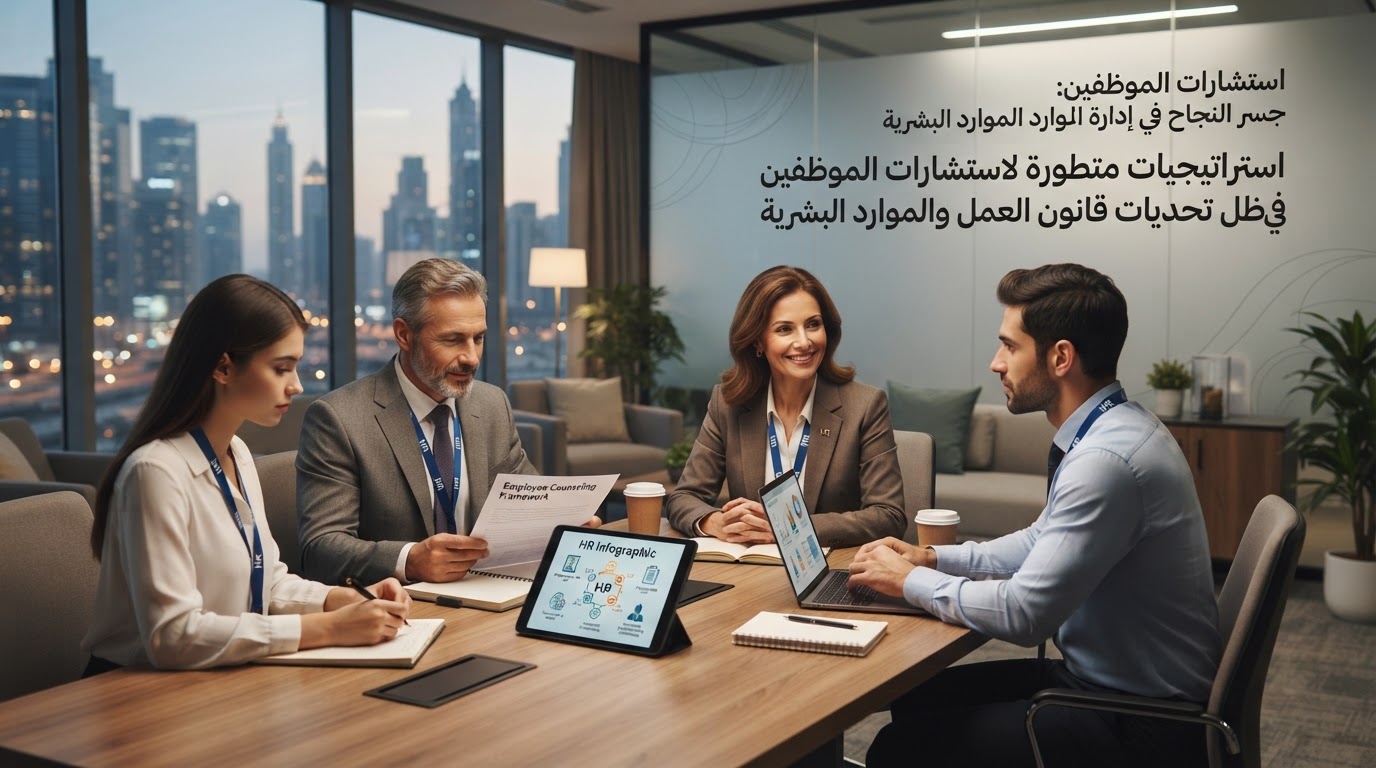
Employee consulting is a strategic tool for enhancing human resource management efficiency and balancing legal requirements with organizational operational objectives. By developing work policies that comply with modern legislation, improving the work environment, and supporting talent management, companies can boost productivity, reduce risks, and build a sustainable corporate culture based on transparency, innovation, and trust.
In light of global developments and current economic challenges, employee consulting is considered a vital pillar for organizational success and achieving financial and organizational sustainability. This approach is based on the belief that human capital is the primary driver of competitive advantage in the market. Therefore, employee consulting has become a strategic tool needed by organizations, whether large or emerging, to develop flexible work environments that meet the requirements of modern labor and human resources laws.
Employee consulting provides a comprehensive platform that supports the adoption of sound work policies and procedures, ensuring their compliance with local and international laws. Specialized consultants offer in-depth analytical insights that help leaders understand the strengths and weaknesses of their human resources management system. This analysis goes beyond simply applying legal tools; it extends to providing practical recommendations that contribute to building a motivating work environment that fosters innovation and productivity.
Balancing organizational compliance with rules and regulations with productivity and talent development is a key challenge for business leaders. Experts believe that achieving this balance requires a comprehensive vision that integrates legal expertise with modern talent management strategies. For example, consultants can provide insights into fair performance appraisal processes and design training and development programs that align with technological and economic shifts. This integrated approach contributes to increased efficiency and strengthens employee confidence in their organizations.
On the other hand, employee consulting plays a pivotal role in updating employment policies and workplace relationships within an organization. Constant changes in regulations and laws necessitate the adoption of flexible policies that ensure the organization is prepared to face any future challenges. In this context, the role of a specialized legal advisor becomes crucial in transforming these policies from mere written documents into effective strategies supported by advanced technological and administrative applications. Implementing such strategies is a true investment in human capital, which positively impacts company productivity and customer satisfaction.
The experience of a legal advisor in the field of employee consulting serves as a bridge between administrative policies and their practical application. In light of the changing dynamics of global markets, every organization must leverage the expertise of consultants to modernize its human resources governance system. This process hinges on a thorough review of employment contracts and compensation systems, as well as the development of mechanisms for continuous performance evaluation. Through these practices, organizations gain the competitive edge and the ability to adapt to any sudden changes in the regulatory or economic environment.
Furthermore, employee consultations extend beyond simply adapting laws and regulations to current needs; they encompass building a corporate culture based on transparency and integrity. Often, a strong corporate culture can be cultivated through collaboration between senior management and teams to define shared strategic goals that foster morale and encourage innovation. This approach not only enhances the organization's standing with employees but also helps attract top talent and strengthen relationships with both investors and clients.
From a strategic perspective, employee consulting is an integral part of digital transformation and management development. Adopting modern management methods based on data and digital analytics contributes to creating a sustainable and efficient work environment. Experienced consultants use advanced analytical tools to assess performance and identify gaps in the human resources management system. This analysis provides leaders with a clear vision of the paths that can be taken to modernize administrative procedures and ensure compliance with legal and regulatory requirements, ultimately leading to improved overall organizational performance.
It is worth noting that the challenges facing employee consulting extend beyond the mere theoretical application of laws and regulations, encompassing the issue of innovation in developing business strategies. In an era of rapidly evolving technologies, it has become essential for organizations to adopt sophisticated management solutions based on innovation and technology. For example, companies can utilize artificial intelligence systems to analyze employee performance and accurately identify training needs. This approach not only enhances productivity but also opens new horizons for talent management in a way that meets the demands of the modern age.
In light of these facts, employee consulting appears as a vital link between the legal and administrative aspects, and a key element in ensuring a balance between employee rights and business requirements. Successful leaders understand that investing in employee consulting is not merely an additional expense, but a strategic investment that directly benefits management processes and productivity. It also contributes to creating a stable and transparent work environment, thereby enhancing the confidence of both investors and clients.
Based on the foregoing, it is clear that the success of organizations depends largely on adopting outstanding human resource management strategies that rely on providing exceptional employee consulting integrated with legal and administrative systems. This consulting ensures that internal policies align with the external organizational environment and reflects a comprehensive management vision that contributes to fostering innovation and improving performance within the organization.
In conclusion, in a constantly changing and highly competitive world, employee consulting stands out as an indispensable strategic tool for achieving organizational success. Consultants specializing in labor law and human resources provide significant added value to companies by offering well-considered, practical solutions that ensure internal systems adapt to evolving legal and economic conditions. This process is key to unlocking future opportunities, where wisdom and innovation are embodied in policies that support the growth and sustainable development of organizations.